Chain link fences in Toledo, built for dogs, big yards and hard winters
Chain link is the fence people underestimate. It looks simple, but whether it stays tight for decades or bellies out after two winters comes down to choices most buyers never hear about: the thickness of the wire, the size of the diamond, the coating, the wall of the posts, and how much stretch went into the mesh before tying. Across Toledo and the Lucas County and Wood County suburbs, chain link earns its place on dog runs, long back lot lines and big open yards where wind would punish a solid fence. This page walks through each part of the system so you can read a proposal line by line.
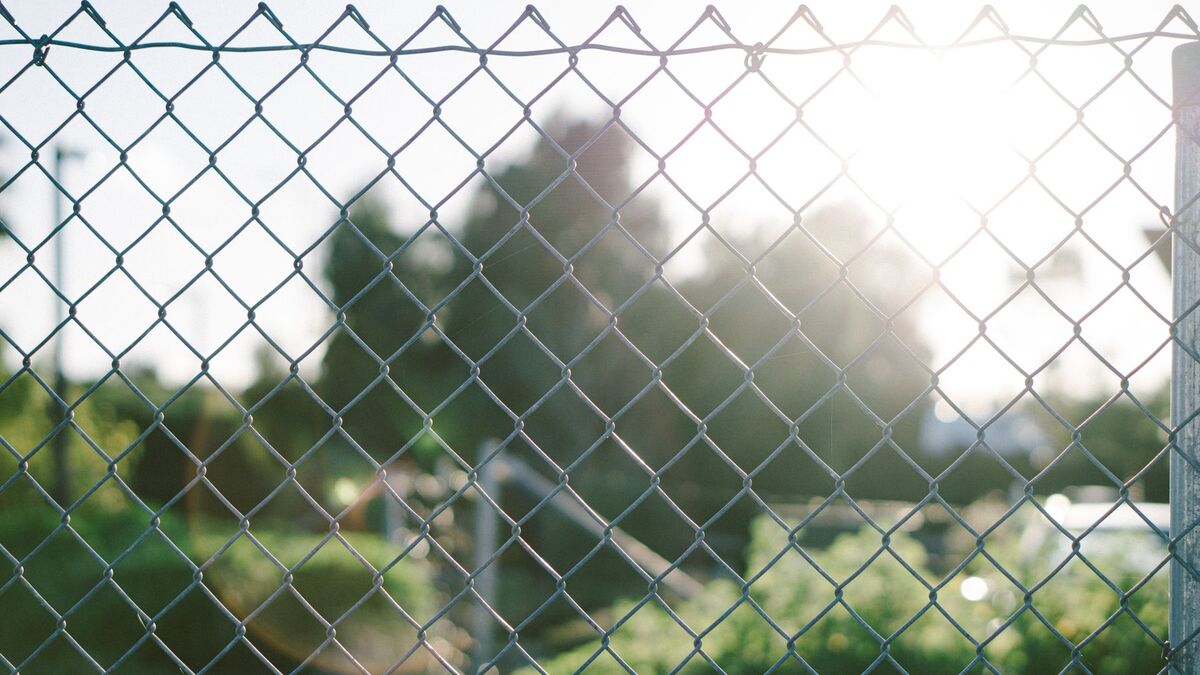
Why chain link still makes sense on a Northwest Ohio lot
A solid wood or vinyl panel acts like a sail. On the flat, open ground that runs from west Toledo out past Oregon and down into Wood County, there is often nothing between your yard and the next township to slow the wind. Chain link lets air pass straight through, so the posts carry a fraction of the load a privacy fence puts on them. That matters in clay that stays soft and wet for weeks every spring.
It also lets snow and water move. Drifts do not bank against open mesh the way they pile up against boards, and meltwater drains past the bottom instead of soaking into wood. For containing a dog, marking a line or keeping kids away from a drainage ditch without boxing in the view, it remains the most practical option there is. The tradeoff is privacy, which slats can partly solve, at a cost covered below.
Wire gauge: the number that decides how long the fabric lasts
Chain link fabric is woven from steel wire bent into a zigzag and spiraled into the strand beside it. Gauge describes the wire thickness, and the scale runs backward: a lower number means heavier wire. Heavier wire resists denting when a dog hits it, holds its diamond shape when a branch falls on it, and usually carries more zinc, which slows rust.
- 9 gauge: the heavy residential choice, stiff enough for large dogs and high-traffic edges.
- 11 or 11.5 gauge: the common middle ground for ordinary backyards and property lines.
- 12 gauge and lighter: fine for a garden pen, a poor choice for anything a big animal will test.
- Ask whether a quoted gauge is the core wire or the finished diameter, since coated fabric is sometimes described by the thicker outside measurement.
Mesh size and what slips through the diamond
Mesh size is the distance across each diamond between parallel wires. Standard residential mesh is about two inches. Smaller mini-mesh is used where small dogs might squeeze through or where a child could get a toehold, and because it uses more wire per foot it weighs and costs more.
If a fence will enclose a pool, the barrier rule adopted for your address covers things like self-closing gates, latch height, openings and anything a child could climb, and that code sets the figures. Mention a pool or a tiny dog before material is ordered so the mesh is chosen to fit.
Galvanized steel or vinyl-coated fabric
Plain galvanized chain link is steel with a zinc layer that corrodes slowly in place of the wire. Coating weights vary between products, and more zinc means more years before the bottom edge, where wet grass and road slush sit, starts turning brown.
Vinyl-coated fabric adds a colored PVC layer fused over a galvanized core. Black is the usual residential pick because it fades into lawns and trees; green and brown exist too. Posts, rails and fittings should be coated to match, or the framework looks like an afterthought. The coating costs more, and a mower or trimmer that scrapes through it exposes the steel, so a mowing strip along the base is worth considering.
- Galvanized: lowest cost, silver-gray finish, simple to patch and extend later.
- Black coated: the popular residential look, blends with landscaping, needs matching framework.
- Green or brown coated: less common, worth asking about when matching an existing run.
The framework: posts, rails and the hardware that ties chain link together
The fabric is only half the fence. The other half is the steel pipe framework that holds it upright against the pull of stretched wire. Knowing the parts makes two proposals far easier to compare.
- Terminal posts: the heavier posts at ends, corners and gate openings, which carry the pulling force of the fabric.
- Corner posts: terminals placed wherever the line changes direction, even at a slight angle on a curved lot line.
- Line posts: lighter intermediate posts. Spacing wider than the system calls for is a common corner cut on a cheap quote.
- Top rail: horizontal pipe running through loop caps on the line posts, keeping them aligned and the top of the fabric straight.
- Tension bars and bands: a flat steel strip threads vertically through the last column of diamonds, and bands clamp it to the terminal so the pull spreads evenly from top to bottom.
- Brace rails and truss rods: a horizontal pipe and adjustable diagonal rod that stop a terminal from leaning toward the fabric.
- Tie wires and bottom tension wire: ties fasten fabric to posts and rail; a heavy wire hog-ringed along the base keeps the bottom edge from being pushed out.
Pipe weight and post depth in freeze-thaw clay
Two posts that look identical from the street can be very different underneath. Fence pipe comes in several diameters and wall thicknesses, and the thinnest tubing bends if you lean a ladder on it. On a Toledo-area lot where clay freezes, heaves and then softens every spring, a light terminal is the first thing to fail. Once a corner leans even slightly, tension on the whole run drops and the fabric bags. A proposal should name diameter and wall weight for terminals, line posts and rail separately; if it only says "standard framework," ask what that means.
Frost drives deep into Northwest Ohio ground in a hard winter, so footings must sit below it, and the local building department sets the required depth. Digging and setting are laid out on the fence installation page.
Common fabric heights and how to choose one
Residential chain link is woven in standard heights, most often four, five or six feet. What you may actually build is set by the city, village or township zoning code and any homeowner association, with separate rules for front yards and corner lots, so check before anyone orders material.
- Four feet: the classic front or side yard choice for small and mid-size dogs.
- Five feet: a step up for athletic dogs and yards next to a busy road.
- Six feet: for jumpers, back lines along fields, and runs that will get slats.
- Mixed heights: a lower front and a taller back, joined at a terminal where the height changes.
Stretching and tension: where good chain link is made or ruined
After the framework is set and footings have cured, fabric is unrolled along the outside of the posts, a tension bar is threaded through one end and banded to a terminal, and the fabric is pulled toward the next terminal with a come-along and stretcher bar. The installer pulls until the diamonds narrow slightly and the mesh stops giving under a hand push, then bands off the far end.
Under-stretched fabric sags between posts and lets a dog shove the bottom out within a season. Over-stretched fabric can drag light terminals out of plumb. Finding the right tension is a learned feel, and it separates a fence that looks crisp years later from one that looks tired by next summer. Toledo's flat ground rarely complicates this, though ditch edges and river-bank lots near the Maumee can leave dips that need attention.
Privacy slats and how they change the fence
Slats are plastic strips woven vertically through the diamonds: plain flat ones, winged ones that fill the gaps, and hedge-style ones that mimic foliage. Once a fence is mostly closed, though, it catches wind like a solid fence, and framework sized for open mesh now carries a far bigger load. On an exposed lot near the lake, a slatted run on light posts can lean within a few storms, so tell the contractor about slats before the job is quoted.
Slats also fade and turn brittle with sun and cold. If full privacy is the real goal, compare against a wood privacy fence or a vinyl fence first.
Dog containment and stopping the dig
Most backyard chain link around here goes up because of a dog. The fence has to stop going over, going through and going under. Height and a top rail handle the first, gauge and tension the second. The third is where fences fail, because dense clay softens after rain and a digger can tunnel under a loose bottom edge in an afternoon.
- Keep the fabric close to grade and fill low spots where gaps open under the bottom edge.
- Fasten a bottom tension wire to the fabric so the edge cannot be lifted or pushed out.
- For persistent diggers, lay a wire apron flat along the inside base and tie it to the fabric, so the dog hits wire the moment it starts.
- Or bury a strip of mesh vertically below the line along the problem stretch, which takes more labor but stays hidden.
- Check under the gates, which are often the easiest escape route in the yard.
Single walk-through gates, wide double drive gates, and their hinges and latches
Chain link gates are welded pipe frames with fabric stretched inside. A single walk gate is the usual backyard entry; double drive gates hinge from two posts and meet in the middle, wide enough for a mower or trailer. Gate posts take more stress than anything else on the fence, so they should be heavier than ordinary terminals, with wrap-around hinges that can be adjusted as the ground shifts and a diagonal brace inside wide frames to resist sag.
Latches range from a basic fork latch to lockable and self-latching designs, and a drop rod with a ground receiver holds the idle leaf of a double gate. If a gate already drags or will not catch, see the fence repair page.
What drives the cost and what a good chain link proposal spells out
A contractor prices chain link after walking the property. The main drivers are total length, the number of corners and ends, fabric height and gauge, galvanized versus coated, pipe weight, the count and width of gates, slats, dig aprons, old-fence removal and how easily equipment reaches the line.
A solid proposal names fabric gauge and mesh, coating, diameter and wall weight for each post type, line post spacing, top rail and bottom wire, footing method and depth, every gate with its width and hardware, who handles the OHIO811 locate and any permit or association approval, cleanup, and what workmanship coverage applies. Without those details, two quotes cannot be compared.
For pricing, send the address, a rough sketch of the line, the height you want and a few photos through the contact page, or browse the communities served across Lucas and Wood counties.
Chain link fences in Toledo — common questions
Which wire thickness should I pick to keep a big dog in?
For a big dog that jumps, leans or charges the fence, heavier wire is the safer bet, and 9 gauge is the usual pick because it resists denting and keeps its shape. Pair it with heavy wall terminal posts, a top rail and a bottom tension wire. Light fabric on light posts may hold a calm dog but rarely one that hits the same spot every day.
Does black coated mesh justify spending more than plain galvanized?
For most homeowners who care how the yard looks, yes. Black fabric with matching posts tends to disappear against grass and trees, while bare galvanized reads as a utility fence, and the coating adds a second layer over the zinc. Scrapes from trimmers expose the steel, though. Along a back field nobody looks at, plain galvanized is a sensible place to save.
Can you add privacy slats to an existing chain link fence?
Usually. Slats weave into the existing diamonds and can go in years after the fence was built. The concern is wind: slatted fabric catches far more of it, and a fence built with light posts for open mesh may lean once it is closed in, especially on exposed lots. Have someone check post size, spacing and whether the terminals are plumb before buying slats for a long run.
My dog keeps tunneling out beneath the mesh. How can I block that?
Close up low spots where the bottom edge rides well above the ground, then make sure a bottom tension wire is tied to the fabric so it cannot be pushed out. For a determined digger, a wire apron laid along the inside base and fastened to the fabric works well, since the dog hits wire the moment it starts. A strip of mesh buried vertically below the line is a hidden alternative.
Does a Toledo-area chain link project need city or township approval?
Many cities, villages and townships around Toledo want a fence permit or zoning review before a new fence goes up, and height and placement rules differ between them. Associations in newer subdivisions may limit chain link or require a certain color. Check with your local building or zoning office and your association before ordering material; a contractor working the region can usually point you to the right office.
How long does a chain link fence last in Ohio weather?
Well-built chain link with heavy galvanizing or a good coating often outlives a wood fence put up the same year. What shortens its life here is usually the framework rather than the wire: posts too shallow to resist frost heave, light terminals that lean, and rust along the bottom where wet grass and slush sit. Keeping weeds off the fabric and fixing a leaning corner early does the most for longevity.
Talk through your site
Start with the address, what you want done, and a few photographs of the area, including anywhere water sits after a heavy rain.
Related work
Fence Installation
New fences on flat, poorly drained Northwest Ohio clay, set below frost with permits and gates covered.
Fence Repair
Heaved and leaning posts, wind damage across open lots, rot and gates that will not latch.
Wood Privacy Fences
Treated pine and cedar privacy styles, post spacing for wind and staining cycles.
Vinyl Fences
Vinyl privacy, semi-privacy and picket fences, wall thickness and cold-weather toughness.
Across the metro
Perrysburg
Wood County suburb with newer subdivisions, association rules and pools along the Maumee River.
Sylvania
Northwest suburb with wooded lots, established neighborhoods and larger backyards.
Maumee
River town with older housing stock, mature trees and lots near the floodplain.
Oregon
East-side lots near the lake with flat open ground, wind and wet soils.