Fence repair in Toledo for leaning posts, sagging gates and wind damage
Fences in the Toledo area rarely fail all at once. A post starts to tip after a soggy spring, a gate begins scraping the walk, a gust peels three boards loose, or a falling limb crumples a stretch of chain link. Small problems like these tend to spread: one weak post puts extra strain on its neighbors, and a dragging gate wears out its own hinges. The good news is that a large share of trouble can be fixed without tearing everything out, provided someone figures out why it happened in the first place. Below you will find the failures seen most often on Northwest Ohio clay, the fix that usually suits each, and the signs that tell you when patching no longer makes sense.
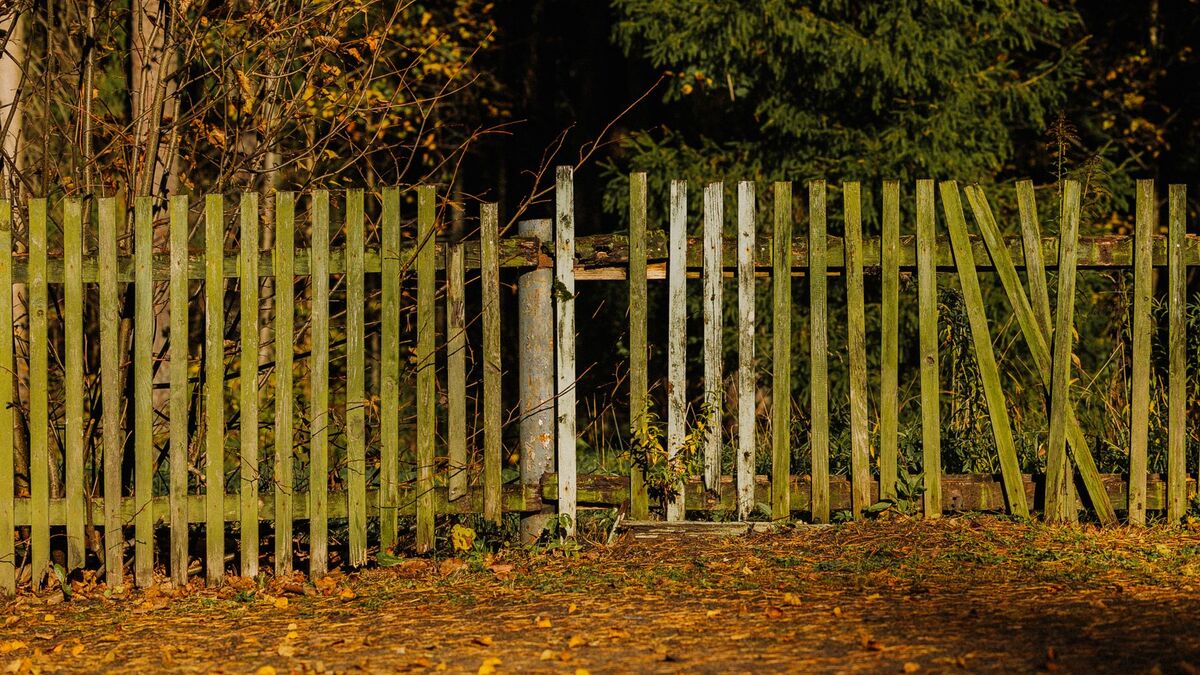
Post decay right at the soil line
Wood posts usually give out a few inches above and below the surface of the ground. That band stays damp longest, gets air and fungi, and is where decay does its work. A post can look fine above and be soft as a sponge where it disappears into the dirt. Push a screwdriver into the wood just below grade: if it sinks in easily, the post is compromised.
Clay that holds water, soil or mulch heaped against the base, and concrete collars that trap moisture all speed things up. A single rotted post can sometimes be replaced on its own, though older fences often have several posts near the same point of failure. Choosing ground-contact lumber and good drainage for any replacement post helps it outlast the original.
Frost heave and the posts it pushes up
Toledo winters push frost deep into wet clay, and as that soil freezes, it expands and grips whatever is in it. A post that is not set below the frost line, or one with a footing that flares wider at the top, can be lifted a little each winter. The result is posts that rise unevenly, rails that tilt, and gates that stop lining up with their latches.
Heaved posts rarely settle back into place on their own. The usual repair is to pull the post, dig the hole deeper than before, get rid of any mushroom-shaped footing, and reset it with a setting method that sheds water. The local building department sets the required depth for your address.
Fixing a fence that leans
A leaning fence is a symptom, and the cause decides the repair. Rotted posts, heaved posts, soil that has gone soft from standing water, wind pressure on a solid fence, and a tree root pushing from below can all tip a line over. Sometimes the problem is just one post; sometimes a whole run has been sliding for years.
If the post is sound and the footing is stable but the fence is leaning, it may be possible to straighten it and add bracing. If the post is rotten or the footing has moved, the post usually has to be reset or replaced. A temporary brace can hold things in place until the real fix happens.
Gates that sag, drag or will not latch
Gates take a constant load on one side and get opened and slammed every day, so they are often the first part of a fence to need help. Sagging usually comes from one of three sources: the hinge post leaning toward the gate, the gate frame racking out of square, or hinges and screws working loose. Seasonal latch trouble is often from frost moving the posts a little each winter.
Fixes depend on the cause. A loose hinge can be re-fastened with longer screws or moved to fresh wood. A racked wood gate may need a new diagonal brace or a turnbuckle and cable kit. A leaning hinge post usually has to be reset. Vinyl and metal gates may need new reinforcement or hardware. Simple adjustments are often enough to get a gate swinging cleanly again.
Broken rails, split pickets and missing boards
Individual pieces fail more often than whole fences. Rails crack where they meet the post, pickets split from nails or impact, and boards come loose as wood shrinks and swells through the seasons. Most of these can be replaced piece by piece.
For wood fences, matching the size and profile of the existing boards is usually straightforward, though new wood will look different until it weathers or is stained. For vinyl, matching depends on finding the same brand and profile. Chain link fabric can often be spliced, and bent top rail sections can be swapped. Replacing a broken piece also gives a chance to check whether the posts nearby are sound.
After the storm: wind, falling limbs and flattened runs
Strong storms blow across the flat, open ground of Northwest Ohio, and solid fences catch every bit of that force. Common damage includes panels torn off their rails, posts snapped at the ground, sections pushed over by falling branches, and chain link crushed by limbs. After a storm, start with these steps:
- Stay away from any downed power line and report it to the utility before going near the fence.
- Take photos of the damage from several angles, including any tree or limb that caused it.
- Secure loose panels or gates so they do not swing or blow into a car, house or neighbor's yard.
- If you have a pool or a dog, set up a temporary barrier until the fence is fixed.
- Reach out for a repair visit once it is safe, and have the photos ready to share.
Chain link that is loose, stretched or torn
Chain link problems usually show up as slack fabric, a bent top rail, broken tie wires, or mesh pulled away from the posts. A fallen limb or a car bumping the fence can also crush a section. Slack fabric can often be re-stretched with a come-along and stretcher bar, then re-tied. Torn fabric can be spliced by weaving in a new section.
Bent top rail is usually replaced. Terminal posts that have tilted under the tension of the fabric may need to be reset. The way chain link is built and tensioned is covered in depth on the chain link fence page.
Vinyl that has cracked, split or popped loose
Vinyl tends to fail from impact, especially in cold weather when it is stiffer. Snowblower ice, a dropped ladder or a hockey puck can crack a picket or a rail. Panels can also pop out of their rails during a windstorm, and gates can sag if they were built without metal reinforcement.
Many vinyl repairs come down to swapping out the damaged part. The challenge is matching: brands and profiles change, and colors can drift between production batches. If you still have the brand and style name from the original install, keep it handy. More on how vinyl is built and why it behaves the way it does is on the vinyl fence page.
Sister, reset or swap: three ways to save a post
When a wood post fails, there are three main options. Each fits a different situation:
- Sistering: bolting a new post or a steel repair spike alongside the damaged one. It is quick and less disruptive, but it is a patch that suits a fence already near the end of its life.
- Resetting: digging out the existing post, clearing the old footing, and setting it again deeper or with better drainage. It works when the post itself is still sound.
- Replacing: pulling the old post entirely and setting a new one. This is the best long-term fix for a rotted post and gives the fence a fresh start at that point.
Short-term bracing until the permanent fix
Sometimes a fence needs to stay standing for a while before it can be repaired properly. A two-by-four braced diagonally from the post to a stake in the ground can hold a leaning section. Ratchet straps can keep a loose panel from flapping. For a dog yard or pool area, a temporary barrier or a section of portable fence can keep things safe. Temporary fixes buy time, but they should not become permanent, since they can put strain on parts that are still sound.
When patching stops making sense
Whether to fix or start over mostly depends on the share of the line in trouble and the fence's age. If one or two posts or a single gate are the problem, repair makes sense. If posts are rotting along the whole line, boards are cracking everywhere, or each storm takes out another section, putting money into a full replacement often gives better value. Fences that have reached the end of their life tend to fail faster once the first posts go.
If replacement is the right call, the fence installation page covers what a new build involves, and the wood privacy fence page covers material choices. Repair visits are available across the region, including Maumee and the other towns on the areas page. Snap the worst spots, then use the contact form to tell us the street and what broke.
Fence repair in Toledo for leaning posts — common questions
Is one tipped post worth fixing by itself, or does the run need work?
Often a single post can be fixed or replaced on its own, as long as the rest of the line is sound. The contractor will check the posts on either side, since a leaning post can strain its neighbors and sometimes several posts are failing at once. If the problem is rot, a new post set below the frost line is the usual answer. If it is frost heave or soft soil, resetting deeper with better drainage often solves it.
How do I tell if an aging wooden fence still deserves a repair?
Check the posts first, since they decide how much life the fence has left. Push a screwdriver into each post just below the ground. If most are firm, repairs to boards, rails or a gate usually make sense. If many posts are soft, rotting or leaning, the fence is likely near the end, and repairs will only buy a short time. The overall condition of the boards and how often problems keep recurring also matter.
Every January my gate stops closing. What is going on?
In Northwest Ohio clay, frost can lift posts slightly each winter, especially if they are not set deep enough. When the hinge post and latch post move by different amounts, the gate no longer lines up and the latch stops catching. It may go back in spring as the ground thaws. The lasting fix is usually resetting one or both posts below the frost line that the local building department specifies, with a footing that sheds water.
If one vinyl panel cracks, does the whole stretch have to go?
Usually not. Vinyl fencing is built from separate parts, so a cracked picket, rail or post sleeve can often be swapped without disturbing the rest. The challenge is matching the brand, profile and color, since products change over time and colors can vary between batches. If you have paperwork from the original job, keep it handy. If an exact match is no longer made, a close match can sometimes go on a less visible section.
A storm just flattened part of my fence. What comes first?
Put safety first. If a power line is down or tangled with the fence, stay away and contact the utility. Once it is safe, take clear photos of the damage and any tree or limb involved. Secure loose panels and gates so they cannot blow into anything. If you have a dog or a pool, set up a temporary barrier. Then reach out for a repair visit and share the photos so the contractor knows what to expect.
Can slack chain link mesh be pulled tight again?
Yes, in most cases. Slack fabric can usually be re-stretched using a come-along and a stretcher bar, then re-tied to the posts and top rail. If the terminal posts have tilted under the pull of the fabric, they may need to be reset first, or the fabric will slacken again. Torn or crushed sections can often be cut out and spliced with new mesh of the same gauge and pattern.
Will replacement boards stand out next to the weathered ones?
New wood looks different at first. Fresh treated pine has a green or tan tint, and fresh cedar is redder than weathered cedar. Over a season or two, new boards usually weather toward the color of the old ones. If the fence is stained, restaining the whole fence once the new wood is dry enough to absorb finish is the quickest way to make repairs blend in.
Talk through your site
Start with the address, what you want done, and a few photographs of the area, including anywhere water sits after a heavy rain.
Related work
Fence Installation
New fences on flat, poorly drained Northwest Ohio clay, set below frost with permits and gates covered.
Wood Privacy Fences
Treated pine and cedar privacy styles, post spacing for wind and staining cycles.
Vinyl Fences
Vinyl privacy, semi-privacy and picket fences, wall thickness and cold-weather toughness.
Chain Link Fences
Chain link for dogs, back lot lines and large yards, galvanized or black-coated.
Across the metro
Perrysburg
Wood County suburb with newer subdivisions, association rules and pools along the Maumee River.
Sylvania
Northwest suburb with wooded lots, established neighborhoods and larger backyards.
Maumee
River town with older housing stock, mature trees and lots near the floodplain.
Oregon
East-side lots near the lake with flat open ground, wind and wet soils.